
10 Years with Kanban
Why Simplicity Still Wins

Originally published on my Blogger site on August 29, 2024. Preserved here on Substack.
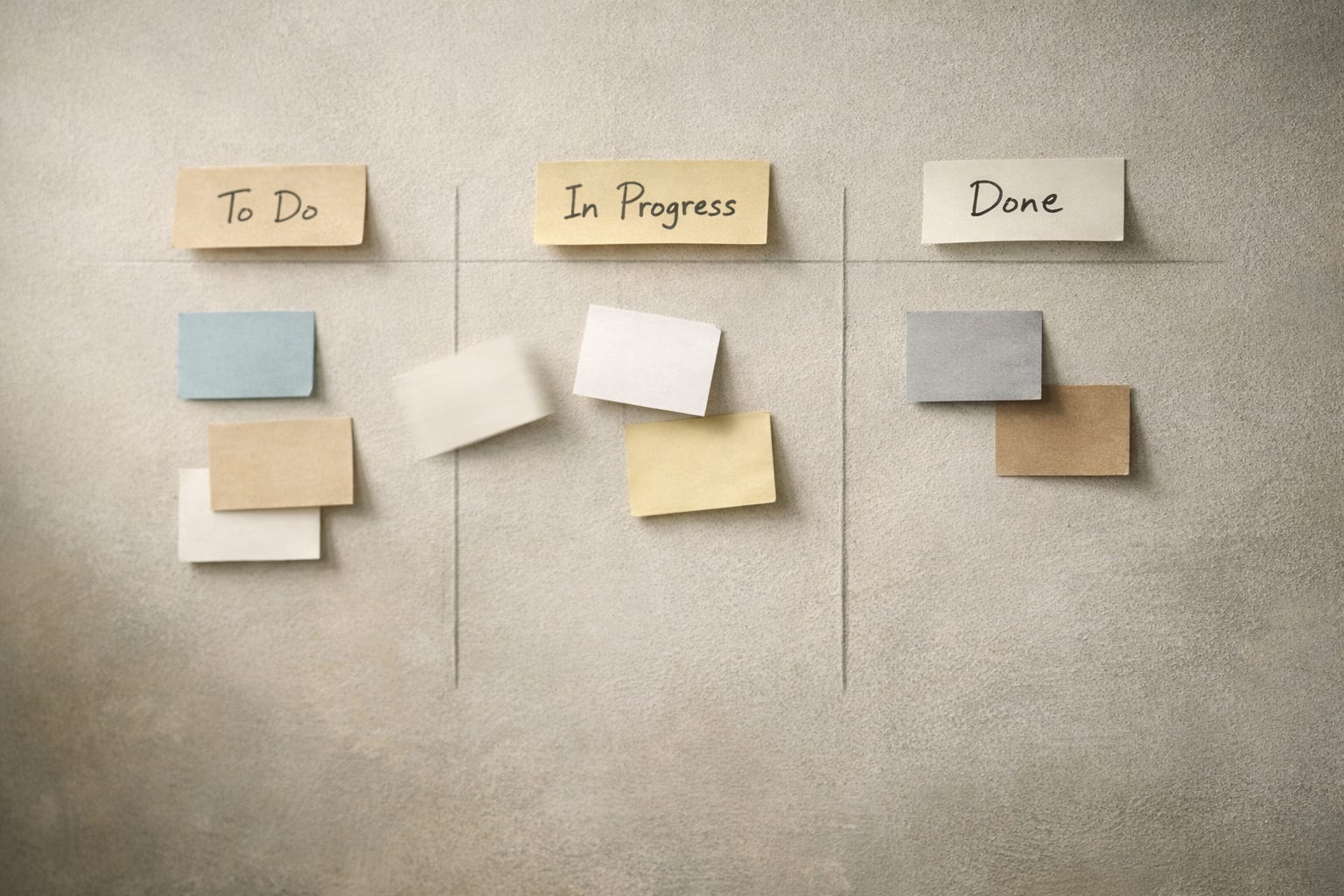
Ten years ago, I picked up Kanban almost by accident.
I didn’t attend a workshop. I didn’t read a manifesto. I just needed a way to see my work. So I opened Trello, made a few columns, and started dragging cards around.
That small act quietly changed how I think about work.
Over the years, I’ve moved my boards from Trello to GitHub Projects to Notion. The tools changed. The shape stayed the same. And somewhere along the way, I realized Kanban isn’t really a productivity technique at all.
It’s a philosophy about attention.
In 2024, when everything competes for our focus and speed is mistaken for progress, Kanban feels more relevant than ever.
What Kanban actually is
At its core, Kanban is a visual system for managing work as it moves through a process.
It originated in Toyota’s manufacturing system in the 1940s, designed to reduce waste and make bottlenecks visible. The word itself translates to “signboard” or “billboard.” That matters. The system assumes that if you can see your work, you can manage it more thoughtfully.
Strip away the jargon and certifications and you’re left with something simple:
What am I working on?
What’s next?
What’s done?
That’s it.
Kanban doesn’t promise hacks. It doesn’t gamify productivity. It asks you to confront reality. And that can be uncomfortable.
How I think about Kanban now
After a decade of using it personally and with teams, I’ve come to see Kanban less as a board and more as a set of quiet constraints.
1. Make the work visible
When work lives only in your head, everything feels urgent. Everything feels heavy.
The moment you put it on a board, something changes. The chaos externalizes. You stop being the system and start observing it.
Three columns are enough:
To Do
In Progress
Done
Anything more is optional. Anything less is denial.
2. Limit work in progress
This is the hardest part. And the most important.
Kanban forces a question most people avoid: How many things can I actually do well at once?
For individuals, I’ve found that one to three active tasks is the honest range. Beyond that, quality drops. Anxiety rises. Progress slows.
Limiting WIP isn’t about discipline. It’s about respect. Respect for your cognitive limits.
3. Be intentional about what starts
Movement from “To Do” to “In Progress” should feel deliberate, not reflexive.
Before pulling something in, I ask:
Does this actually matter?
Is it ready?
What am I choosing not to work on by starting this?
Kanban doesn’t just surface work. It surfaces tradeoffs.
4. Manage flow, not busyness
A healthy Kanban board feels calm.
Work enters. Work moves. Work finishes.
When something stalls, it’s visible. When something finishes, it creates space. That empty space matters. It’s the signal that you can pull the next thing without piling stress on top of unfinished effort.
Flow beats hustle every time.
5. Make your rules explicit
Even when you’re working alone, ambiguity creates friction.
Decide things like:
What does “ready” mean?
When is something actually done?
What qualifies for “In Progress”?
Writing these down sounds excessive until you realize how much energy you waste renegotiating them in your head every day.
6. Build in reflection
Kanban without reflection turns into a fancy to-do list.
I periodically look at my board and ask:
What keeps getting stuck?
What keeps getting pulled too early?
What finishes quickly and why?
Small adjustments compound. That’s the real power.

Kanban beyond productivity
Most people associate Kanban with software teams or manufacturing. That’s a narrow view.
Kanban works anywhere there’s flow:
Creative work
Leadership responsibilities
Personal projects
Even life admin
What’s often missed is that Kanban encourages intentionality, not speed.
In a culture obsessed with doing more, Kanban quietly argues for doing less. Better. On purpose.
It teaches patience. It rewards completion. It makes overcommitment visible instead of heroic.
That alone makes it radical.
Why Kanban still matters
In 2024, work has become louder, faster, and more fragmented. Tools multiply. Calendars fill. Context switching becomes a default state.
Kanban doesn’t fight that with complexity. It counters it with clarity.
Make the work visible. Limit what you start. Finish what you begin.
After ten years, I don’t use Kanban because it makes me faster. I use it because it helps me stay honest about how I spend my attention.
That’s not a productivity win. It’s a life one.
If you’ve only used Kanban as a lightweight project board, I’d encourage you to look again. Not as a system for output, but as a practice for focus.
It’s not about moving cards.
It’s about respecting the flow of your work and the limits of being human.
References and Resources
1. Kanban - https://en.wikipedia.org/wiki/Kanban
2. Kanban Method: A Beginner’s Guide - https://www.atlassian.com/agile/kanban
3. The History of Kanban - https://kanbantool.com/kanban-guide/kanban-history
4. Introduction to Kanban: What It Is, How It Works, Benefits, and Core Principles - https://www.icagile.com/resources/intro-to-kanban-what-it-is-how-it-works-benefits-and-core-principles