
The Power of Pause
Mindful Leadership in a Distracted World

Originally published on my Blogger site on June 16, 2025. Preserved here on Substack.

How intentional stillness became my secret weapon for better decisions, stronger teams, and sustainable success
The Moment Everything Changed
It was early on a Tuesday morning, my phone buzzed with a critical security alert at 2:47 AM. My first instinct? Panic, then action. But instead of immediately jumping into crisis mode, I did something that would have seemed counterintuitive to my younger self: I paused.
I took three conscious breaths, felt my feet on the floor, and asked myself one question: “What does this situation actually need from me right now?”
That 30-second pause prevented what could have been hours of cleanup from a reactive decision. It also reminded me why I’ve become passionate about something most leaders dismiss as “soft stuff” — the transformative power of intentional stillness in leadership.
The Invisible Threat to Modern Leadership
In cybersecurity, we’re trained to identify threats everywhere. But here’s what took me years to recognize: the biggest threat to effective leadership isn’t external. It’s our own reactivity.
We live in a world where the average executive checks their phone 150 times a day, where attention spans have dropped from 2.5 minutes to 44 seconds, and where “busy” has become a badge of honor rather than a warning sign. The result? Leaders who mistake motion for progress, reaction for response, and urgency for importance.
The cost is staggering: 82% of cybersecurity leaders report feeling burned out, with 93% citing overwhelming stress as a key factor in considering leaving their roles. But here’s what the research doesn’t tell you, and what I learned the hard way, stress doesn’t just impact you. It cascades through every decision you make, every conversation you have, and every team you lead.
Why Pausing Is Your Leadership Superpower
Mindful leadership isn’t about meditation retreats or feel-good corporate wellness programs. It’s about tactical advantage.
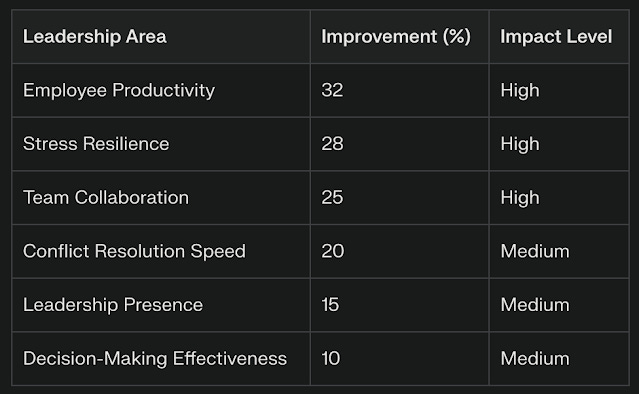
When you pause before responding, you activate what researchers call the “parasympathetic nervous system”, shifting from fight-or-flight reactivity to clear, strategic thinking. This isn’t just theory. Leaders who practice mindfulness show measurable improvements across every metric that matters.
The measurable benefits of mindful leadership practices showing percentage improvements across key performance indicators
The data is compelling, but the lived experience is transformative. Pausing gives you the space to choose your response rather than being hijacked by your reaction.
My Personal Toolkit: Rituals That Changed Everything
Let me share what actually works—not theoretical concepts, but practices I use daily:
The 2-Minute Reset
Between every major meeting or decision, I close my eyes and practice what I call “tactical breathing”, exhaling for twice as long as I inhale. This simple technique activates your body’s calming response and shifts you from reactive to responsive mode.
Why it works: In cybersecurity, we know that 30 seconds of clear thinking can prevent hours of incident response. The same principle applies to leadership decisions.
The Strategic Pause Framework
During high-stakes conversations, whether it’s a board presentation or a difficult team discussion, I use a four-step process:
Recognize the emotional charge or urgency
Breathe consciously for 2-3 cycles
Reflect on what response serves the situation best
Respond with intention rather than impulse
The payoff: This framework has saved me from more reactive decisions than I can count. It’s also taught my teams that thoughtful response is more valuable than immediate reaction.
Evening Leadership Reflection
Every day ends with 10 minutes of honest reflection: Where did I pause versus react? What worked? What didn’t? This isn’t self-criticism, it’s continuous improvement applied to leadership presence.
The Cybersecurity Leadership Edge
Here’s what most leadership advice misses: some fields demand different approaches to mindfulness. In cybersecurity, where split-second decisions can mean the difference between containment and catastrophe, mindful leadership isn’t luxury, it’s necessity.
During incident response, I’ve learned that the leader who panics creates more chaos than the incident itself. When your team sees you pause, breathe, and respond with clarity, it doesn’t just improve the outcome, it builds the kind of trust that makes teams more effective long-term.
The tactical applications are endless:
Using conscious breathing before security briefings to ensure clear communication
Implementing micro-pauses during crisis response to prevent reactive decisions
Creating space between threat notification and response action
Modeling calm presence during high-stress situations
Refer to the quick reference guide at the end of this article.
The ROI of Intentional Leadership
Let’s talk numbers, because mindful leadership isn’t just about feeling better. It’s about performing better.
Research shows that leaders who practice mindfulness experience significant improvements in measurable outcomes: enhanced decision-making effectiveness, increased team productivity, improved stress resilience, and faster conflict resolution. These aren’t marginal gains. They’re competitive advantages.
But here’s what the research can’t capture: the ripple effect of leading from presence rather than pressure. When you pause, you give your team permission to think rather than just react. When you respond rather than react, you model the kind of leadership that builds psychological safety. When you lead from clarity rather than chaos, you create environments where innovation thrives.
Your Next Move: From Knowing to Doing
Knowledge without application is just expensive entertainment. Here’s how to start:
Today: Set three pause reminders on your phone. When they go off, take one conscious breath and ask: “What does this moment need from me?”
This week: Implement the Strategic Pause Framework in one challenging conversation. Notice the difference.
This month: Build a simple morning ritual. Even five minutes of conscious breathing can shift your entire day.
The bottom line: In a world that rewards reaction, pausing becomes your competitive advantage. In industries that demand split-second decisions, conscious response becomes your differentiator. In leadership roles that require managing complexity, mindful presence becomes your most valuable skill.
The irony isn’t lost on me: in cybersecurity, we spend millions on systems that can pause, analyze, and respond intelligently to threats. Maybe it’s time we invested the same intentionality in our own leadership operating system.
What threat are you missing by not pausing to see it clearly?

The Leader’s Pause Toolkit: Practical Techniques for Mindful Leadership
Quick Reference Guide for Busy Executives
The 2-Minute Reset Technique
When to use: Between meetings, before important decisions, when feeling overwhelmed
How to do it:
Close your eyes and take a deep breath
Exhale for twice as long as you inhale (e.g., inhale for 4 counts, exhale for 8)
Repeat for 5-6 breaths
Notice the shift in your nervous system from reactive to responsive
The Strategic Pause Framework
When to use: During high-stakes conversations, conflict situations, or when receiving challenging feedback
How to do it:
Recognize - Notice the emotional charge or urgency
Breathe - Take 2-3 conscious breaths
Reflect - Ask yourself: “What response serves the situation best?”
Respond - Choose your words and actions intentionally
Daily Mindfulness Rituals for Leaders
Morning Centering (5 minutes)
Start your day with 5 minutes of conscious breathing
Set intention for how you want to show up as a leader
Visualize your most challenging meeting going well
Transition Breathing (30 seconds)
Use between every meeting or major task
One deep breath to close the previous activity
One deep breath to open space for what’s next
Evening Reflection (10 minutes)
Review the day’s leadership moments
Notice where you paused vs. reacted
Identify one area for tomorrow’s improvement
The Cybersecurity Leader’s Special Considerations
High-Pressure Decision Making
Use the “Strategic Pause Framework” before incident response decisions
Remember: 30 seconds of breathing can prevent hours of cleanup from reactive decisions
Create space between threat notification and response action
Stress Management During Crisis
Implement micro-meditations (even 30 seconds helps)
Use breathing to shift from survival mode to strategic thinking
Model calm presence for your team during incidents
Quick Wins: Techniques You Can Start Today
Set hourly pause reminders on your phone or watch
Practice the 4-7-8 breathing technique: Inhale for 4, hold for 7, exhale for 8
Create transition rituals between high-intensity activities
Use conscious breathing during your commute or before entering meetings
End each day with a few minutes of reflection on your leadership presence
The ROI of Pausing
Research shows leaders who practice mindful pausing experience:
32% increase in productivity
10% improvement in leadership effectiveness
Better decision-making under pressure
Reduced stress and improved resilience
Enhanced team trust and psychological safety
Remember: The goal isn’t to eliminate stress, but to respond to it more consciously. Even one mindful breath can shift you from reactive to responsive leadership.
References:
Mindful Leader. “6 Essential Books on Mindful Leadership.” https://www.mindfulleader.org/blog/71769-essential-books-on-mindful-leadership
Mindful Leader. “Four Mindful Steps to Lead With Compassion.” https://www.mindfulleader.org/blog/69201-leading-with-compassion-in-four-mindful
Mindful Leader. “Becoming a Mindful Leader.” https://www.mindfulleader.org/blog/74930-becoming-a-mindful-leader
Barnes & Noble. “The Mindful Leader: 7 Practices for Transforming Your Leadership, Your Organisation and Your Life.” https://www.barnesandnoble.com/w/the-mindful-leader-michael-bunting/1123148211
CyberSN. “What 70 Cybersecurity Leaders Reveal About Burnout.” https://cybersn.com/rsa-2025-live-poll-results/
Emerald Insight. “Developing leaders through mindfulness practice.” https://www.emerald.com/insight/content/doi/10.1108/jmd-09-2018-0264/full/html
SecureWorld. “Battling Burnout: A Growing Concern for CISOs and Security Professionals.” https://www.secureworld.io/industry-news/battling-burnout-ciso-cybersecurity